Kyoritsu Earth Resistivity Testers by Major Tech: Verifying the Foundation of Earthing Safety
When it comes to electrical safety, a reliable earthing system is essential. But you can’t assume an earth electrode will perform as expected, this must be verified by testing with purpose-built instruments. Earth resistivity testing is critical, and why Major Tech South Africa, supplies professional Kyoritsu instruments, is the choice of electricians and engineers.
What Is an Earth Resistivity Test?
An earth resistivity test measures how easily current flows through the soil at a site. Since different soil types (sand, clay, rock) vary greatly in electrical resistance, measuring resistivity is crucial before designing an earthing system. These measurements can better inform design and placements of various earthing components and electrodes on a site and confirm their functionality after installation.
What Does It Check?
It checks the soil resistivity and earth resistance that directly impact the performance of your earthing electrodes. Higher soil resistivity means fault current is harder to disperse into the ground, potentially compromising safety.
Accurate measurements help engineers design earthing systems that are effective, economical and compliant with standards in the stipulated compliance standards.
Why Is It Important?
If Earth Resistance is too high, earthing electrodes may struggle to dissipate fault currents quickly and safely. This increases the risk of dangerous touch voltages during faults and can prevent protective devices from operating as intended. A properly designed and verified protective Earth installation will ensure that during fault conditions, leakage currents and dangerous voltages are routed through electrodes to earth mitigating electrocution risks and tripping Earth Leakage/Ground Fault interrupters.
What Does a Resistivity Test Confirm?
Successful testing confirms:
- Soil characteristics are understood, and can be used to design sufficient protective earthing
- Earthing design is correct in design and application.
- Installation is safe and compliant
Where Are Earth Resistivity Testers Used?
These testers are essential at:
- Substations and large industrial installations
- Commercial and multi-story buildings
- Telecommunications and data centers
- Utility and renewable energy sites
- Residential installations both new and old
Kyoritsu Earth Testers Supplied by Major Tech
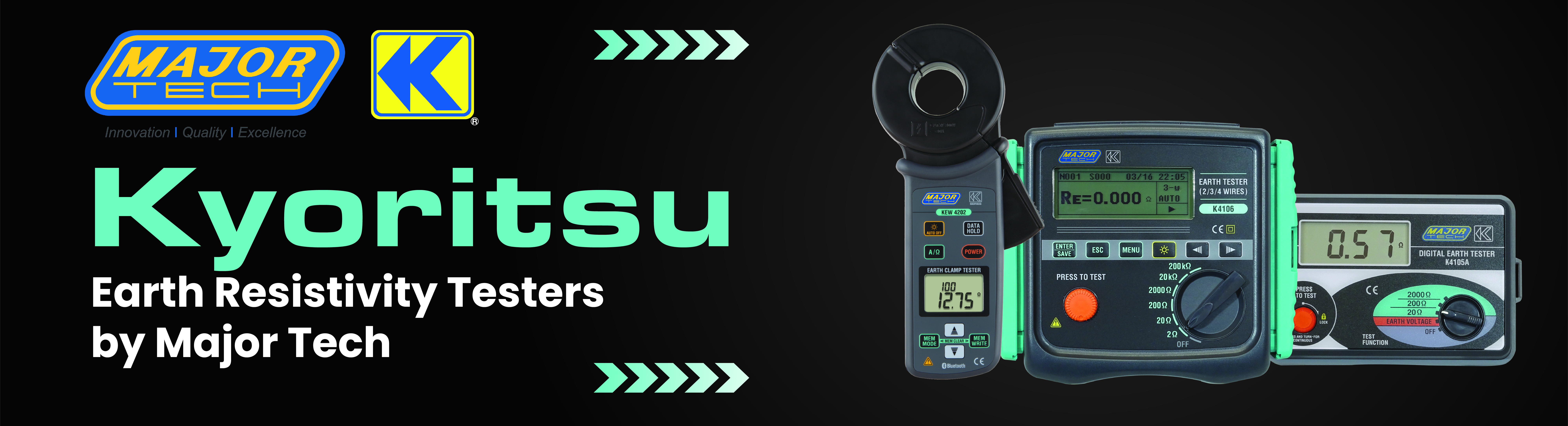
Major Tech supplies a range of professional Kyoritsu Earth Resistivity and Resistance Tester instruments suitable for soil resistivity testing and earth resistance measurement:
- Earth Resistivity and Resistance Tester (Kyoritsu K4106) 2Ω – 200kΩ @ up to 80mA
A comprehensive earth resistivity and resistance tester using the four-pole Wenner method for accurate soil surveys and earthing design. Ideal for establishing optimum earth electrode locations and ensuring effective fault current dispersion and measuring earth voltage.
- Digital Earth Resistance Tester (Kyoritsu K4105) 2Ω – 2kΩ @ up to 3mA
A compact digital earth resistance tester for routine earth resistance checks with clear LCD display and IP-rated protection, perfect for verifying earth rod performance and auxiliary spike conditions and checking if Voltages are present on Earth.
These Kyoritsu meters deliver reliable data, helping you design and verify earthing systems with confidence.
Why Choose Major Tech & Kyoritsu?
Kyoritsu test instruments are globally recognised for accuracy, durability and professional performance. When supplied by Major Tech South Africa, they come with local technical support, calibration services and dependable after-sales care, essential for professional electrical testing and certification.
The Bottom Line
Earth resistivity testing verifies the implementation and function of your earthing system.
With Kyoritsu earth resistivity and resistance testers supplied by Major Tech, you can measure with confidence, design with precision, and deliver installations that are safe, reliable and compliant.